Cast a precision geometric pizza oven from repeatable moulds.
A design workflow inspired by Italian masonry tradition, using modern dome geometry to create repeatable mould families, self-registering joints, entrance sections, and chimney transitions.
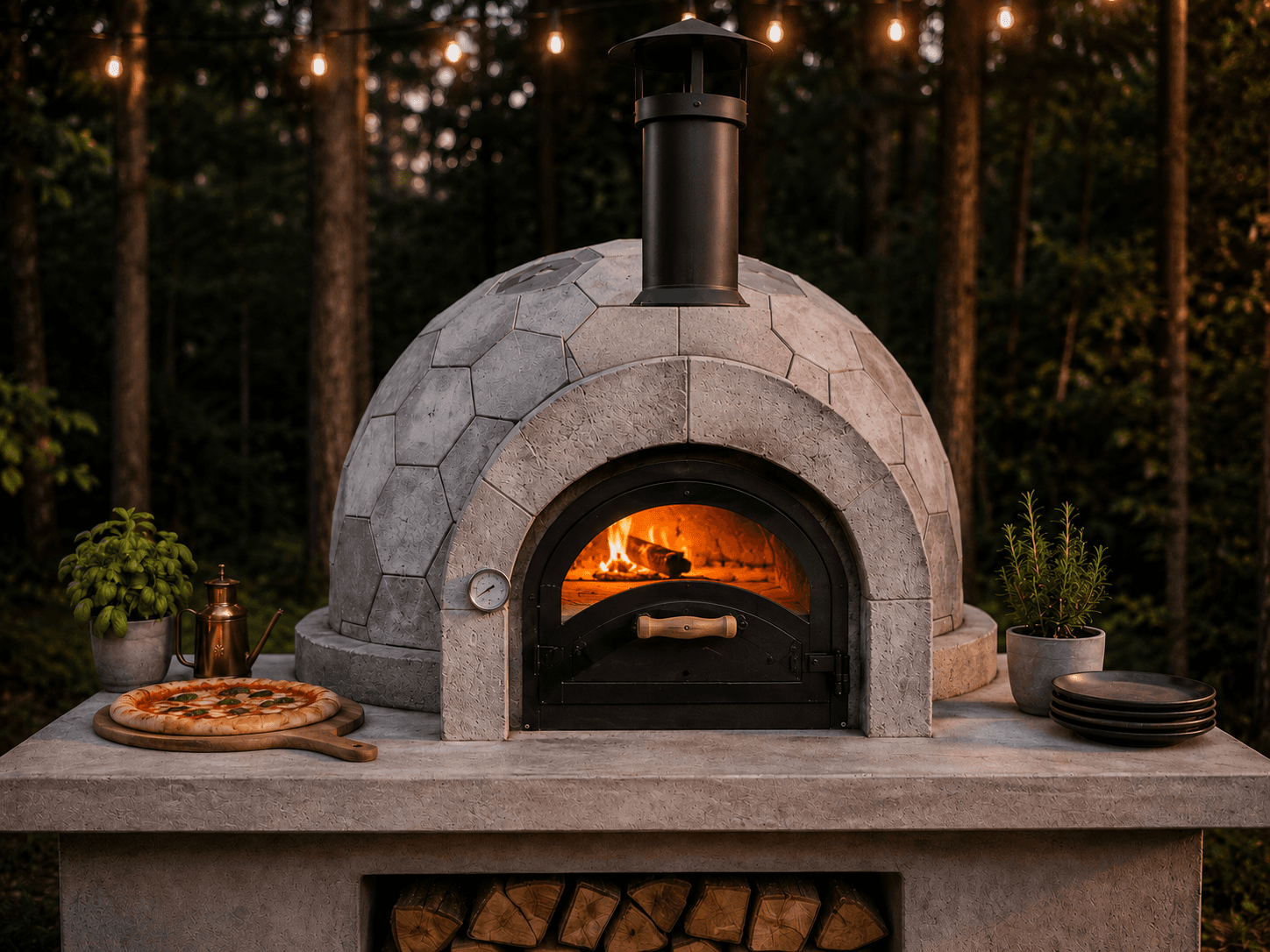
Traditional oven building is beautiful, but it is not easy to repeat.
Most DIY pizza ovens require difficult brick cutting, inconsistent joints, rough dome shaping, and lots of experience. A small mistake in the lower courses compounds as the dome rises.
Too much hand cutting
Every wedge, taper, and arch cut adds time, dust, waste, and room for error.
Inconsistent dome geometry
Small inaccuracies can create awkward joints, weak spots, or a lumpy internal cooking chamber.
Hard to scale
One builder can make one good oven, but repeating the same quality again and again is difficult without a system.
A mould system turns the dome into a repeatable build.
Instead of guessing the curve brick by brick, the oven is broken into precision cast modules. Each block is shaped by the dome math, then cast using reusable moulds.
Design the dome
The dome geometry is calculated mathematically before any physical work begins.
Generate block families
The dome is divided into repeatable block types, minimising unique mould shapes.
Make the moulds
3D print, CNC machine, or fabricate moulds from the geometry data.
Cast refractory blocks
Pour refractory mix into moulds, compact or vibrate, and cure under controlled conditions.
Assemble the dome
Blocks are laid in planned order using joint geometry and temporary supports.
Add entrance and chimney
Tunnel, mouth, flue transition, and chimney are built from dedicated mould parts.
Insulate, render, cure, cook
Complete with insulation, weatherproofing, slow curing, then bring to cooking temperature.
More than a dome. A complete oven geometry system.
Dome block moulds
The main oven chamber is built from repeatable cast blocks derived from the final dome geometry.
Bottom course / base blocks
Partial lower blocks allow the dome to sit cleanly on a flat insulated base while preserving the dome curve.
Entrance tunnel moulds
A proper corridor-style oven mouth gives access for large pizzas, bread, trays, peels, and fire management.
Chimney transition moulds
The flue area is treated as its own engineered transition, not an afterthought.
Designed to locate, lock, and guide itself.
The aim is not loose blocks buried in mortar. The block geometry should help each piece find its correct position. The joints are designed to register against neighbouring blocks so the dome naturally wants to assemble into the correct form.
Self-registering does not mean magic. The oven still needs correct materials, careful casting, curing, and assembly. But the geometry should reduce guesswork and make the finished dome more accurate.
- Mortar hides uneven cuts
- Builder judges angles by eye
- Lots of cutting
- Hard to repeat
- Blocks cast to shape
- Joints guide placement
- Less cutting
- Easier to document and repeat
How the build works.
Choose oven size
Select the internal diameter and dome height based on cooking style, available space, and heat mass requirements.
Generate the geometry
The dome is calculated first as a complete shell. Block families are then derived from the geometry.
Produce or buy moulds
Moulds can be 3D printed, CNC machined, fabricated, or supplied as a physical kit depending on the final product route.
Cast the blocks
Use a suitable refractory casting mix, vibrate or compact properly, and allow controlled curing.
Assemble the dome
Blocks are laid in their planned order, using the joint geometry and temporary supports where required.
Fit entrance and chimney
The tunnel, mouth, flue transition, and chimney are built from their own moulded parts.
Insulate, render, cure, cook
Once the structure is complete, the oven is insulated, weatherproofed, slowly cured, and brought up to cooking temperature.
Built for different levels of maker.
Digital Builder Pack
For makers with printers/CNC access.
- Dome CAD files
- STL mould files
- Block map
- Casting guide
- Assembly guide
Physical Mould Kit
For serious DIY builders.
- Reusable mould set
- Dome block families
- Entry tunnel moulds
- Chimney transition moulds
- Build manual
Installer / Commercial Pack
For outdoor kitchen installers and small manufacturers.
- Repeatable mould system
- Training material
- Commercial build documentation
- Support and licensing discussion
Digital Builder Kits
Download the mould files, print the tooling, cast the refractory blocks, and build a precision geometric pizza oven from home. Choose a fixed kit, a multi-size builder pack, or unlock the full custom generator.
Starter Builder Kit
Fixed-size STL mould files for one oven design.
- One fixed oven size
- STL mould files
- Dome block moulds
- Basic tunnel entrance moulds
- Basic quick-start guide
- Basic safety notes
- Personal DIY licence
Best for experienced makers who already understand 3D printing, refractory casting, and oven building basics.
Coming soon - 22/5/2026Builder Pack
Multi-size digital builder pack with full production documentation.
- Three oven size options
- Three tunnel doorway designs
- STL mould files
- STEP files included
- Full mould printing guide
- Full refractory casting guide
- Full curing and dry-out firing guide
- Assembly diagrams
- Material calculator
- Refractory sourcing guide
- Personal DIY licence
Recommended for most DIY builders.
Coming soon - 22/5/2026Generator Pro
Full custom parametric oven builder with advanced guides.
- Custom dome diameter
- Custom refractory thickness
- Custom tunnel arch designer
- Chimney/throat geometry controls
- Print-bed-aware mould splitting
- STL export
- STEP export
- Full mould printing guide
- Full refractory casting guide
- Advanced tolerance calibration guide
- Shrinkage compensation guide
- Numbered assembly maps
- Personal DIY licence
For advanced builders who want full control over size, thickness, entrance geometry, and print-bed optimisation.
Coming soon - 22/5/2026Compare Digital Packages
Review specific features and formats included in each digital builder kit tier.
| Feature | Starter Builder Kit | Builder Pack | Generator Pro |
|---|---|---|---|
| Basic quick-start guide | Yes | Yes | Yes |
| Full mould printing guide | No | Yes | Yes |
| Full refractory casting guide | No | Yes | Yes |
| Curing and dry-out firing guide | Basic only | Yes | Yes |
| Material calculator | No | Yes | Yes |
| Refractory sourcing guide | No | Yes | Yes |
| STEP files | No | Yes | Yes |
| Shrinkage calibration guide | No | Basic | Advanced |
| Custom generator guide | No | No | Yes |
Licence noteAll digital kits are licensed for personal DIY use only. Files may not be resold, shared, redistributed, used to sell printed moulds, cast refractory blocks, finished ovens, or commercial oven kits without a separate commercial licence.
Need commercial rights? Contact us for workshop and manufacturer licensing.The Parametric Mould Engine
A real-time 3D geometry engine built to design, slice, and calculate custom geodesic refractory pizza ovens.
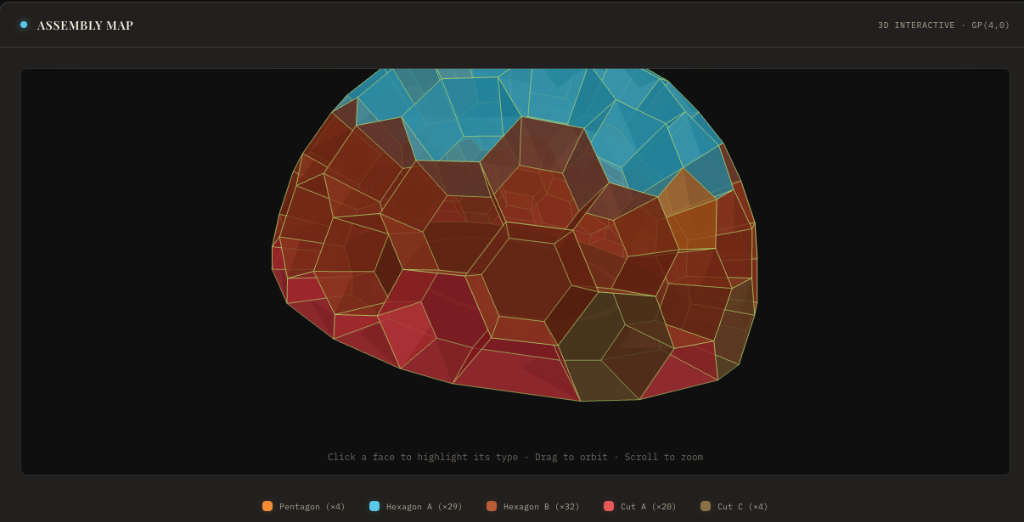
Interactive 3D Assembly Map showing Goldberg polyhedron face classification.
Engineered before it is sold.
This project starts with the dome math. The product will not be released as a vague sketch. The design process validates the full dome first, then solves the entrance, base course, and chimney as connected parts.
- Dome generated from a mathematical sphere/hemisphere model
- Block families grouped to reduce the number of unique moulds
- Bottom blocks adapted for a flat base
- Self-registering joint mode considered essential
- Entry and chimney designed after the dome geometry is stable
- Final mould count determined by geometry, not guesswork
Who this is for.
DIY builders
Build a serious oven without becoming a master brick cutter first.
Makers
Use 3D printing, CNC, or fabrication skills to produce accurate moulds.
Outdoor kitchen installers
Create repeatable oven builds with a consistent look and process.
Small manufacturers
Develop a cast-block oven product from a proven geometric system.
Built for real cooking, not just a pretty dome.
The oven mouth needs to work. The chamber needs to hold heat. The entrance must accept large pizzas, bread, trays, and normal tools. The final design is intended for real wood-fired cooking, not just a decorative garden object.
- Large pizza access
- Bread baking potential
- Thermal mass from cast refractory blocks
- Insulated outer shell
- Proper flue draw
- Durable weatherproof finish
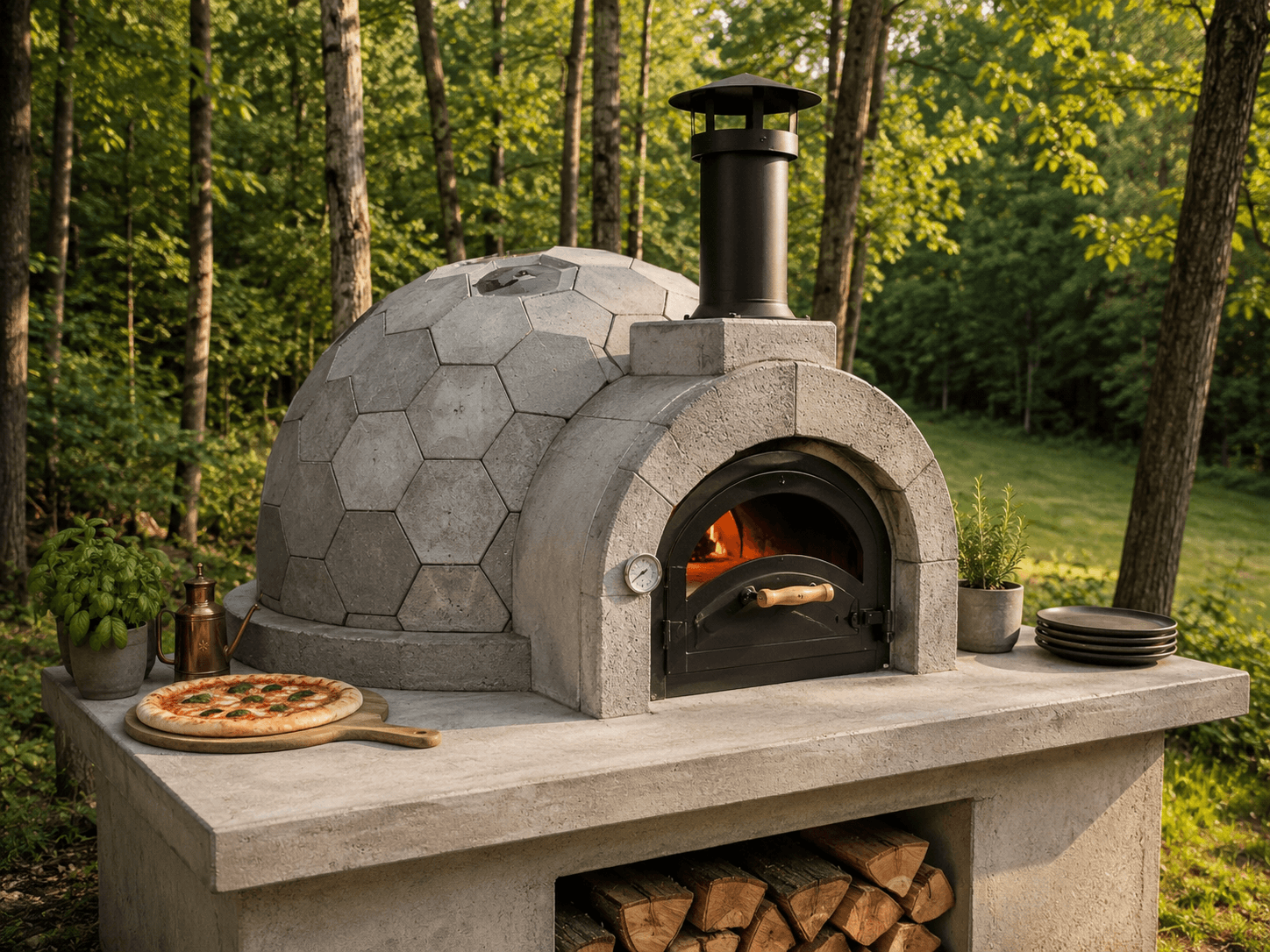
Current development status.
The dome system is in development. The current focus is the first complete dome model: block geometry, mould families, joint behaviour, and base course. Once the dome is fully solved, the entrance tunnel and chimney transition will be finalised.
- Dome geometryFeb 2026Completed
- Repeatable block familiesFeb 2026Completed
- Self-registering jointsMarch 2026Completed
- Base courseMarch 2026Completed
- Entrance tunnelMarch 2026Completed
- Chimney transitionMarch 2026Completed
- Prototype castingMarch 2026Completed
- Multiple sizing optionsApril 2026Completed
- Step file export toolMay 2026In Progress
- Early access listFeb 2026Open
Want to build one, test one, or help manufacture it?
We are looking for serious early interest from builders, makers, installers, and manufacturers. Join the list and tell us how you would use the system.